


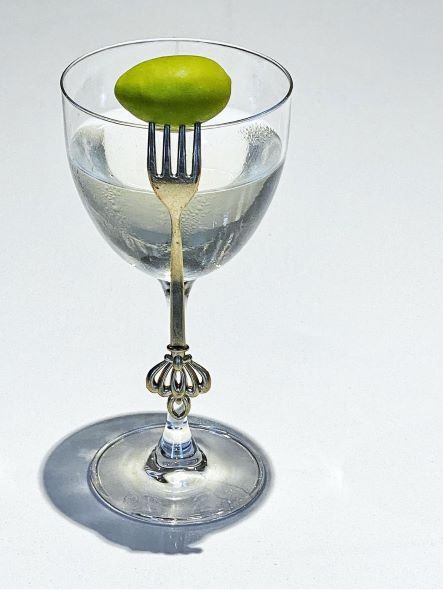
The Dry Martini
Gin
RECIPE:
INGREDIENTS:
- 5 parts chilled Dry Gin (or adjust the ratio to suit your own tastes)
- 1 part chilled Dry Vermouth
- 1 dash of Orange Bitters
- Ice
- 1 strip of lemon peel or a green olive to garnish
INSTRUCTIONS:
In a mixing glass with ice combine your chilled spirits and a dash of Orange Bitters and stir for 30 seconds.
Strain into a chilled Martini glass from the freezer and garnish to serve with either a twist of lemon or a single green olive.
ABOUT
The Martini is a cocktail prepared with London Dry Gin and White Dry Vermouth, garnished with an olive or a lemon twist.
So, what makes the Martini Dry, well as some people think its not the inclusion of more Dry Vermouth, its actually quite the opposite.
There are three types of Martini based on the ratio of Dry Vermouth used, varying from “wet”, which uses the most, to “perfect” and “dry”.
A typical Dry Martini will only have a dash of Vermouth, in fact some bars are known to only rinse the glass with Vermouth before discarding the contents onto the floor before filling with ice cold Gin.
A BRIEF HISTORY
The exact origin of the Martini is unclear. Some believe that its name may have been given from the Martini brand of Vermouth.
Other theorists believe that the Martini evolved over time from the cocktail the Martinez, which was served in the Occidental Hotel in the mid 1800’s
The first Dry Martini has reported been linked to a bartender in New York, working out of the Knickerbocker Hotel in 1912, the Marguerite could be described as an early Dry Martini as it used a 2:1 ratio of Plymouth Gin and Dry Vermouth, enlivened with a dash of orange bitters.
In the 1920’s the Martini as a cocktail reached its most recognisable form of what is traditionally known today, with the 2:1 ratio of spirits being stirred (not shaken) in a mixing glass with ice and the option of “bitters” to chill and then strained into an ice-cold cocktail glass and garnished simply with a green olive or a twist of lemon.
The course of the 20th century saw the Martini become drier and drier, moving from the set 2:1 ratio to 3:1 in the 1930’s and 4:1 in the 1940’s.
The later part of the 20th century saw the ratio fall even further, where Martinis of 50:1 or 100:1 ratio was considered the norm or reduced even further where as stated the act of Vermouth as an ingredient was purely to rinse the glass.